The Squirrel Monkeys of Manuel Antonio: Costa Rica's Rarest Primate
By the naturalist guides at Manuel Antonio National Park Tours — updated January 2026
Everyone comes to Manuel Antonio hoping for sloths. But ask our guides which sighting is genuinely special, and the answer is the Central American squirrel monkey (Saimiri oerstedii) — locally called the mono tití. This tiny, copper-backed primate survives in only a sliver of the planet: Costa Rica's central and south Pacific coast and a corner of Panama. Manuel Antonio sits at the heart of that range, making the park one of the only places on Earth where you can watch them in the wild.
Meet the Mono Tití
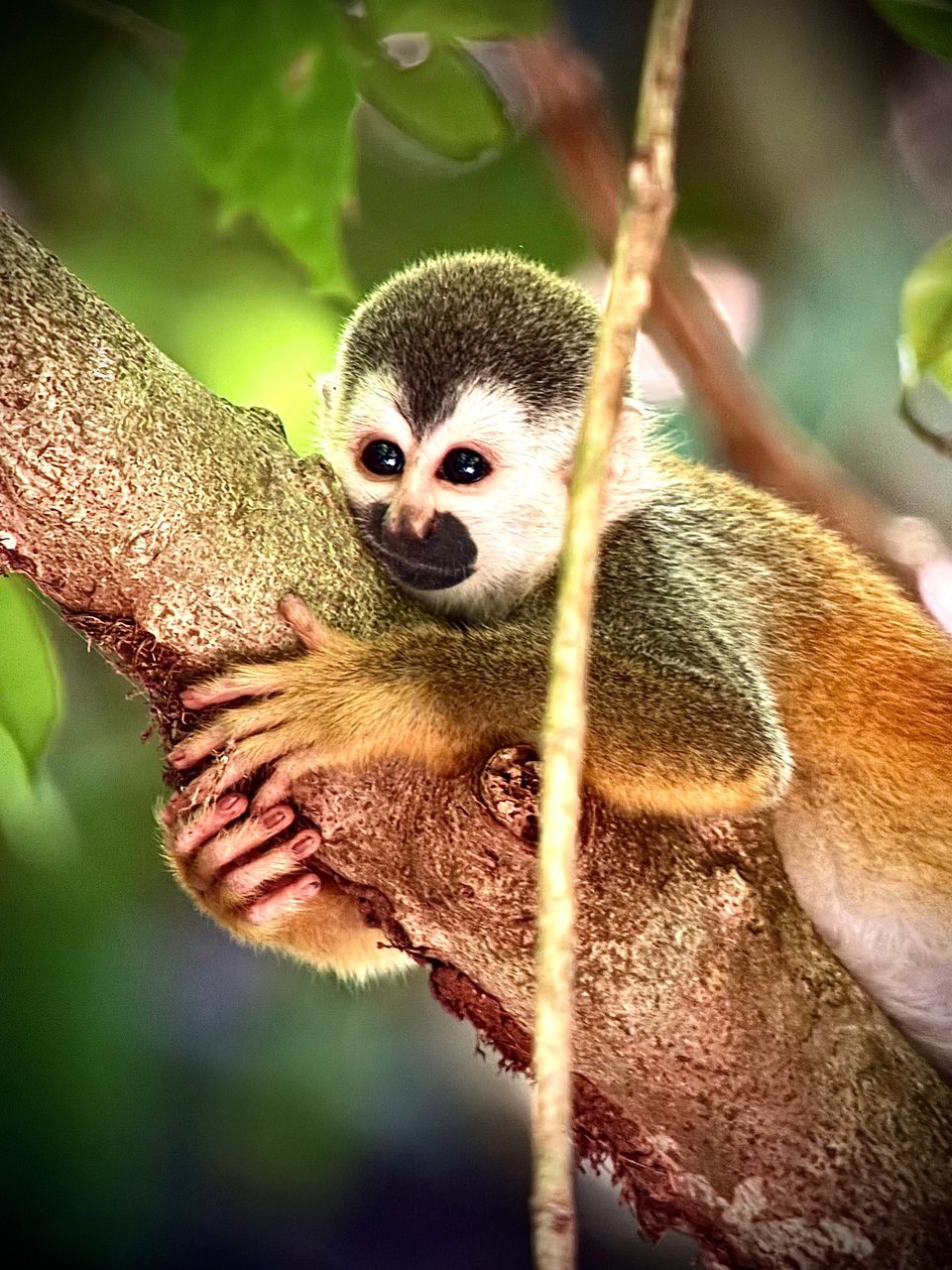
Squirrel monkeys are the smallest of Costa Rica's four monkey species — under a kilogram, with an orange back, white facial mask, and a long balancing tail. They travel in energetic troops of 20–70, pouring through the mid-level canopy like a river of static electricity, gleaning insects, fruit, and the occasional lizard. Where a capuchin swaggers and a howler broods, a squirrel monkey troop simply happens to a stretch of forest — five loud, acrobatic minutes and gone.
They're classified as endangered: habitat loss carved their forest into fragments, and for a time the population fell to alarming lows. Local conservation work — reforested corridors, canopy rope bridges over the Quepos–Manuel Antonio road, protection inside the park — has helped the mono tití begin a slow recovery. Every visitor whose entrance fee and tour supports that habitat is part of the reason.
Where and When to See Them
Unlike sloths, squirrel monkeys don't hold territory in one tree — troops range daily through the park and the surrounding forest, so sightings are about intersecting their route.
- Time of day: early morning and late afternoon, when troops actively forage. The 7:00 AM entry is prime.
- Where: mid-level forest along the Main Trail and Sloth Trail, and frequently in the hotel-zone trees outside the park — many guests spot their first troop from a breakfast table.
- How you'll know: you'll hear them before you see them — high, birdlike chirps and a sudden shiver of branches moving in a wave. Stop, look at mid-height (not the treetops), and wait for the troop to flow past.
- Season: year-round residents. Any month works — details on conditions in Best Time to Visit.
Our guides track the troops' recent movement patterns daily, which is a big part of why guided tours encounter them so much more often than solo visitors — and a spotting scope turns a fast-moving blur into a face-filling portrait.
The Park's Other Three Monkeys
For your checklist: white-faced capuchins (bold, clever, everywhere — guard your bag at the beach), mantled howlers (the dawn roar you heard from your hotel), and the mono tití. Spider monkeys, Costa Rica's fourth species, are largely absent from this park. Three monkey species in a single morning walk is a normal day here — see them all in our Wildlife Gallery.
Watching Responsibly
Never feed monkeys — fed monkeys become raiders, and raiders get relocated or worse. Keep food out of the park entirely (it's prohibited anyway), keep your distance, and skip the flash.
Want the best odds of meeting a tití troop? Our morning tours follow the week's troop movements — park permit, ICT-certified guide, and scope photos included, from $65.
Check tour availability →