Sloths in Manuel Antonio: Where and When to See Them
By the naturalist guides at Manuel Antonio National Park Tours — updated January 2026
If there's one animal every visitor to Costa Rica wants to see, it's a sloth — and Manuel Antonio is one of the most reliable places in the entire country to see them in the wild. Our guides find sloths on nearly every single morning tour. Here's where they are, when to look, and how to actually spot an animal that has spent 60 million years perfecting the art of looking like a clump of leaves.
Two Species Live in the Park
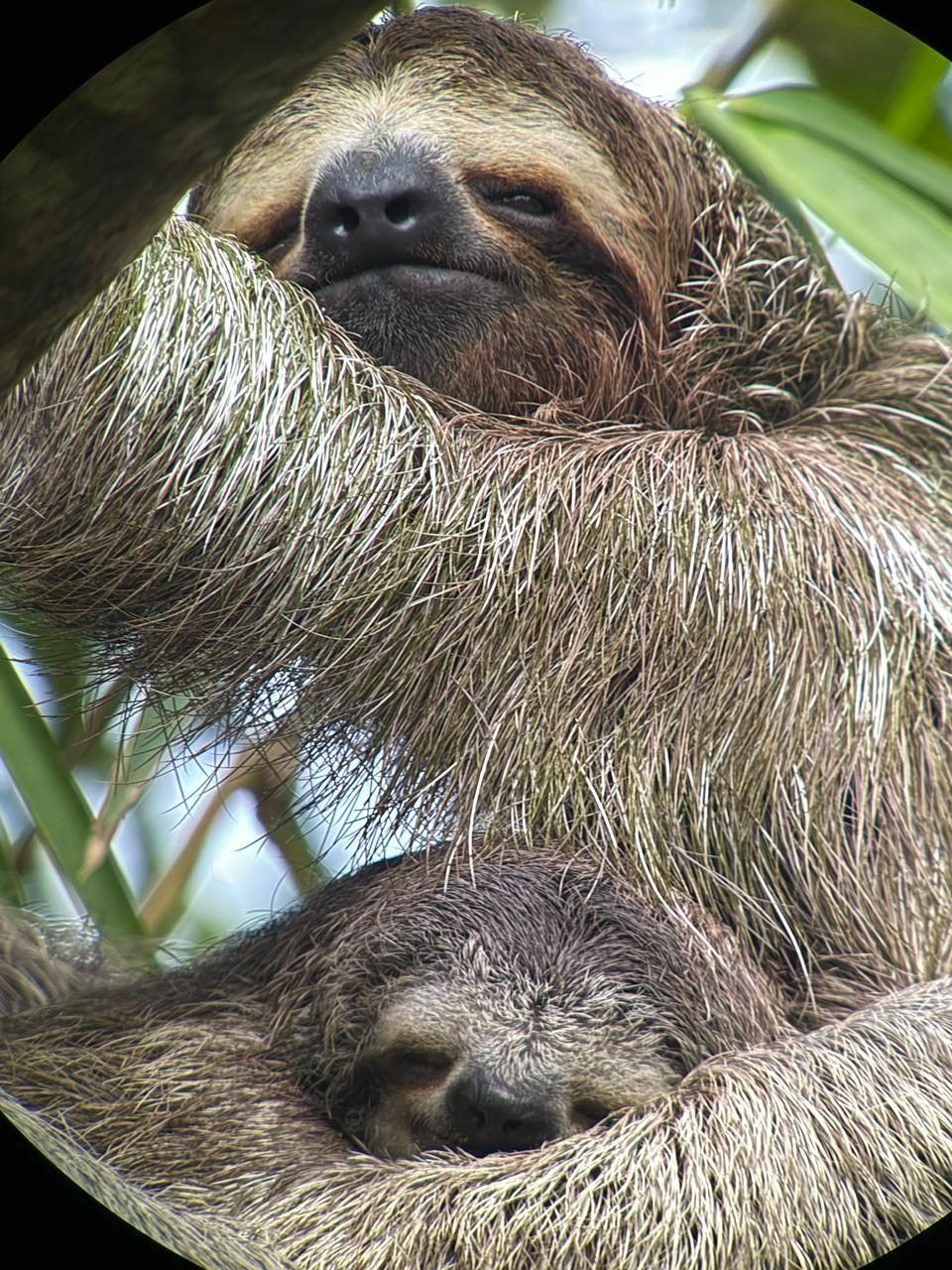
Brown-throated three-toed sloth — the "smiling" one, with the dark eye mask. Active (relatively speaking) during the day, which makes it the sloth you're most likely to watch actually move. Often seen surprisingly low in cecropia and guarumo trees.
Hoffmann's two-toed sloth — bigger, blonder, pig-nosed, and mostly nocturnal. By day it sleeps curled into a ball high in the canopy, doing a world-class impression of a termite nest. Finding one is the classic guide party trick.
Where to Look: The Sloth Trail Earns Its Name
The single best area is Sendero El Perezoso — the Sloth Trail — the elevated boardwalk parallel to the main trail. Its secondary-growth trees, especially cecropias (a three-toed sloth's favorite salad bar), host resident sloths that our guides track week to week. The first kilometer of the Main Trail and the trees behind Playa Manuel Antonio are the other hotspots.
When to Look
- Time of day: first hours after the 7:00 AM opening. Cooler air means more movement — a feeding three-toed sloth at 7:30 AM is a genuinely active animal; by noon everything is a motionless ball.
- Season: sloths are here year-round, so any month works. Green-season mornings (May–November) are quieter on the trails, which helps. More on seasons in Best Time to Visit.
How to Actually Spot One
The honest truth: most visitors walk directly beneath sloths without ever seeing them. They don't move, they don't make noise, and algae growing in their fur turns them the exact green-grey of the canopy. What works:

- Scan cecropia trees — umbrella-shaped leaves, pale trunks. Check where branches fork.
- Look for the "dark lump" that's too smooth to be a termite nest.
- Watch the guides. A cluster of scopes pointed at one tree is nature's press conference.
- Go slow. Speed is the enemy; our full wildlife spotting technique guide explains the method our guides teach.
Or skip the neck strain: on a guided tour, your guide knows where this week's sloths are hanging and puts an HD spotting scope on them — then photographs the sloth through the scope with your phone. Those eyelash-detail shots you've seen from Manuel Antonio? That's how they're taken.
Want a guaranteed expert eye? Our morning tours find sloths on nearly every outing — park permit, ICT-certified guide, and scope photos included, from $65.
Check tour availability →Sloth Etiquette
Never touch, feed, or use flash on a sloth, and be wary of anyone outside a park offering sloth "photo ops" with a captive animal — wildlife selfies fuel illegal capture. In the park, the rule is simple: watch, marvel, leave no trace.